


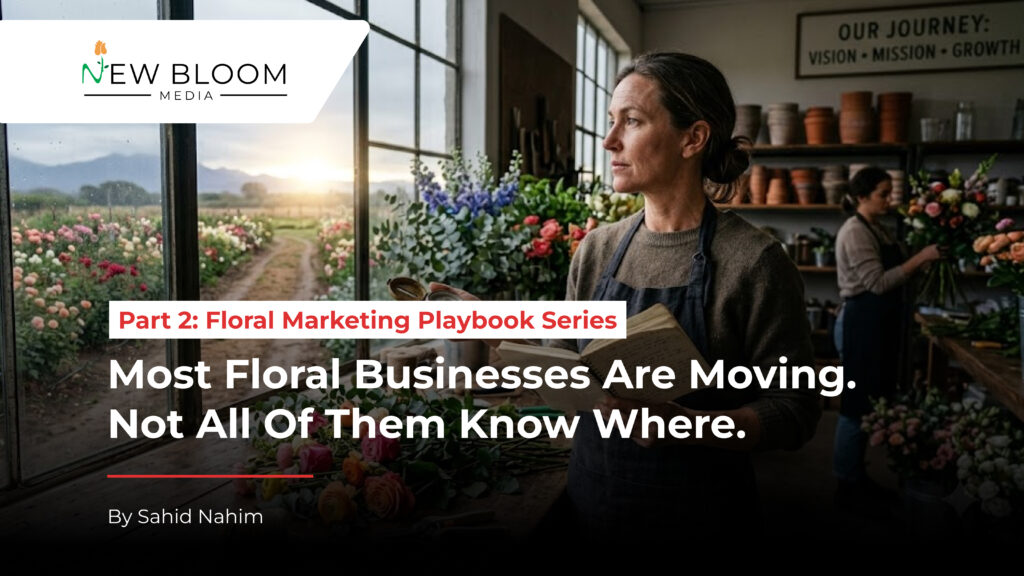
A floral business can be incredibly busy and still be completely unclear about what it is actually building toward.
Like any team setting out on a journey, a business needs a destination. Without one, it becomes difficult to know which road to take, which opportunities to pursue, and which distractions to avoid.
Your vision defines that destination, while your goals become the milestones that help you reach it. Without a clear destination, every opportunity can seem like the right one, every challenge can pull you off course, and every decision becomes reactive instead of intentional.
You may still move forward, but moving isn’t the same as making meaningful progress.
Over the course of my career, I’ve had the privilege of working inside floral companies, building my own business, collaborating with industry organizations, and spending hundreds of hours talking with professionals across nearly every sector of the floral supply chain. Through those experiences, one pattern has become increasingly clear.
The floral industry is filled with passionate businesses—companies that care deeply about their customers, produce exceptional products, invest in dedicated teams, and often carry decades, even generations, of experience.
Yet many have never taken the time to clearly define two of the most important parts of their business: their mission and their vision.
It’s rarely because they don’t have one. More often, they’ve simply never put it into words or unintentionally treated the two as though they mean the same thing.
One question I often ask during conversations with floral business owners is, “What’s your mission?”
The answers are always interesting.
Some people tell me how long they’ve been in business. Others explain what they sell. Some describe their customers, while others point me to a paragraph on their website.
Very few clearly explain why their business exists today and what future they’re working to create.
That tells me this isn’t simply a terminology problem.
It’s an intentionality problem.

Your Story Explains Who You Are. Your Mission and Vision Explain Where You’re Going.
In the first article of this series, I shared why your company story is the foundation of floral marketing clarity.
Your story explains who you are.
Your mission explains why you exist.
Your vision defines where you’re going.
Together, they become the compass that guides every decision your business makes. Without them, marketing becomes reactive, hiring becomes inconsistent, and growth becomes accidental. With them, every decision can be evaluated against something larger than today’s opportunity.
Mission and vision are often confused because they’re closely connected, but they serve very different purposes.
Your mission answers the question, “Why do we exist?” It defines the purpose that guides your business today.
Your vision answers the question, “Where are we going?” It describes the future you’re working to create.
Your goals measure your progress toward that future, while your values shape how you get there.
When those four elements work together, they create a framework for making better decisions—not just bigger ones.

People Support What They Believe In
One lesson has stayed with me throughout my career.
People don’t just support products. They support purpose.
Customers, employees, and business partners naturally gravitate toward organizations whose values align with their own. But they can’t connect with what your business stands for if you haven’t clearly defined it yourself.
That’s why your mission and vision are far more than statements on a website. They establish the principles that guide your decisions, shape your culture, and communicate what your business is working to achieve. They give people a reason to believe in something beyond the products you sell.
Think about the floral businesses you admire most. Chances are, you don’t remember them simply because of their products. You remember how they lead, what they consistently represent, and the impact they’re trying to make within the industry.
That consistency builds trust. And over time, trust becomes one of the strongest competitive advantages a business can have.

Your Team Needs More Than Instructions
One of the greatest benefits of having a clear mission and vision isn’t external. It’s internal.
When your team understands your mission, they understand why decisions are made. When they understand your vision, they understand where the company is headed. That shared understanding gives people the confidence to make decisions without constantly waiting for direction.
Instead of simply following instructions, they begin making choices that support the same long-term objectives. Communication improves, decisions become more consistent, and the business becomes easier to scale because everyone is working toward the same outcome.
A simple way to test whether your mission and vision are truly part of your culture is to ask a few members of your team two questions:
- Why does this company exist?
- Where is it going?
If every person gives you a different answer, your business doesn’t have a communication problem—it has an alignment problem.
When everyone can answer those questions consistently, leadership spends less time correcting course and more time helping the business move forward.

Mission and Vision Are Marketing Tools
Many businesses believe marketing begins with social media, advertising, or a new website.
I don’t.
I believe marketing begins long before any campaign is launched. It begins with understanding who you are, why your business exists, and where you’re trying to go.
Whether you’re a flower grower, wholesaler, florist, breeder, or supplier, people want to know more than what you sell. They want to understand what your business stands for and whether your values align with their own.
That’s what transforms marketing from simply promoting products into building meaningful relationships.
When your mission and vision are well defined, they become a filter for every message your business communicates—from your website and sales presentations to your hiring process, partnerships, and long-term strategy.
I’ve found that many floral businesses struggle with marketing not because they lack creativity, but because they lack focus and intentionality. Without a shared direction, every campaign begins pulling the business differently. Marketing becomes a collection of activities instead of a coordinated strategy.

The Three Biggest Mistakes I See Floral Businesses Make
After years of working with floral businesses, I’ve noticed three mistakes appear over and over again.
The first is treating mission and vision as though they’re interchangeable. They’re closely connected, but they serve different purposes. When they’re blended, neither provides the guidance it was meant to.
The second is writing them once and never using them again. Too often, they become paragraphs on a website instead of principles that shape hiring, marketing, leadership, and everyday decision-making.
The third is assuming that because leadership understands them, everyone else does too. If your employees, sales team, and managers can’t explain your mission and vision consistently, they can’t consistently represent your business.
Mission and vision don’t create value simply because they’re written.
They create value because they’re practiced.
What a Strong Mission and Vision Actually Include
One of the biggest misconceptions is that a mission or vision statement needs to sound impressive.
It doesn’t.
It needs to be authentic.
A strong mission explains why your business exists, who it serves, and the value it creates every day.
A strong vision paints a picture of the future you’re working toward. It should be ambitious enough to inspire your team while remaining realistic enough that people believe it’s achievable.
If your mission and vision could easily belong to almost any company, they’re probably too generic. The strongest ones reflect what makes your floral business distinct and provide a foundation for every major decision you make.
Mission and Vision Apply to Every Sector of the Floral Industry
This conversation isn’t limited to retail florists. Every business within the floral industry benefits from having a clear mission and vision, regardless of where it fits in the supply chain.
- A grower defines the impact they want their flowers to have beyond the field.
- A wholesaler establishes the kind of relationships they want to build with their customers.
- A breeder communicates the purpose behind developing new varieties.
- A florist creates the experience they want every customer to remember.
- A supplier or service provider defines the role they want to play in helping the industry succeed.
Although those businesses serve different markets, they all answer the same two questions: Why do we exist, and what future are we working to create?
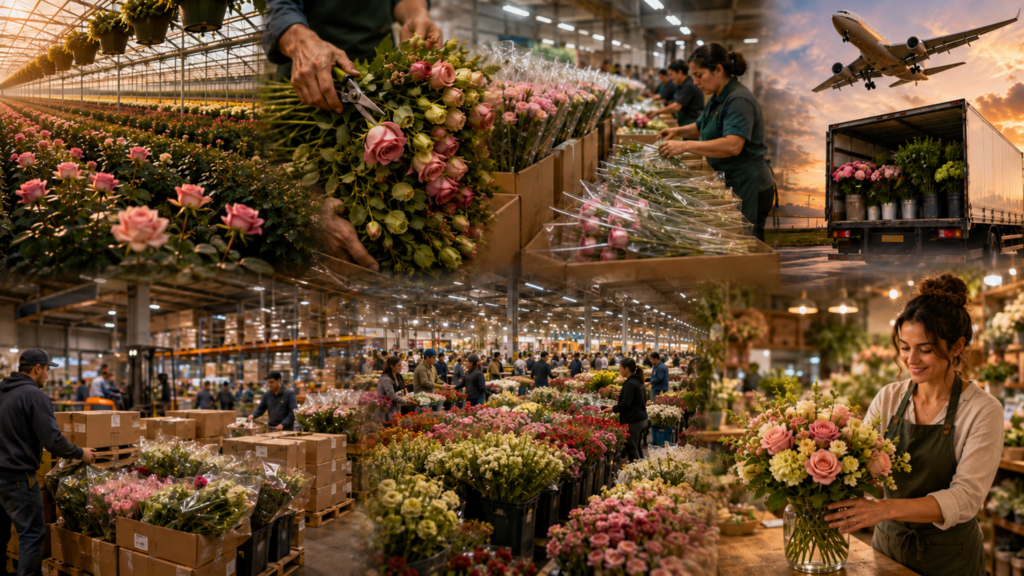
Busy Isn’t the Same as Intentional
A floral business can be profitable, growing, hiring, and introducing new products while still lacking a clear sense of direction. Activity creates momentum, but momentum alone doesn’t guarantee meaningful progress.
Your mission helps you evaluate whether an opportunity supports the reason your business exists, while your vision helps you determine whether it moves you closer to the future you’re working to create. Together, they become a practical filter for decisions about customers, partnerships, investments, products, and long-term growth.
Businesses don’t become intentional because they’re busy. They become intentional because every decision supports a larger objective. That’s how momentum becomes meaningful progress.
What’s Ahead in the Floral Marketing Playbook Series
Mission & Vision is the second part of this six-post series, and each article builds another layer of clarity into the floral marketing playbook.
- Post 1: Floral Company Story — Who you are and why it matters
- Post 2: Mission & Vision — The direction that guides every decision (this post)
- Post 3: Customer Personas — Who you are actually speaking to
- Post 4: Value Proposition — What you make possible that others do not
- Post 5: Voice & Tone — How you sound, and why consistency matters
- Post 6: Elevator Pitch — Saying it clearly in 60 seconds or less
Each component stands on its own, but together they create a marketing foundation that helps floral businesses make better decisions, communicate more effectively, and grow with intention.
Final Reflection
Every floral business has a story.
That story explains who you are.
Your mission explains why you exist.
Your vision defines the future you’re working to create.
When those three elements work together, they do more than strengthen your marketing. They influence your leadership, shape your culture, guide your decisions, and help your business grow with greater consistency and purpose.
That’s what this series is really about—not creating better marketing materials, but building a stronger foundation for every decision that follows.

FAQ
What is the difference between a mission statement and a vision statement for a floral business?
Your mission explains why your business exists and the purpose that guides your decisions today. Your vision looks ahead, defining the future you’re working to create. Think of your mission as your reason for being and your vision as the destination you’re striving toward. Together, they provide a framework for making more consistent business decisions.
How do I write a mission and vision for my floral business?
Start by asking two simple questions: Why does this business exist, and what future are we trying to create? Then challenge yourself to answer them as clearly and honestly as possible. A strong mission and vision should reflect your business today while guiding the future—and they should be simple enough that every member of your team can explain them consistently.
Can mission and vision improve floral marketing?
Absolutely. Before customers decide whether to buy from you, they decide whether they trust you. A clear mission and vision help create consistency across your website, marketing, customer experience, and even the way your team communicates. Over time, that consistency builds credibility—and credibility is one of the strongest marketing assets a business can have.
Do mission and vision matter for growers, wholesalers, and breeders?
Yes. Whether you’re a breeder, grower, wholesaler, florist, supplier, or industry organization, every business benefits from knowing why it exists and where it’s headed. The answers may look different from one sector to another, but the need for alignment, consistency, and long-term direction remains the same.
Should a mission or vision change over time?
Your mission often remains relatively stable because it reflects the reason your business exists. Your vision, however, may evolve as your company reaches new milestones, enters new markets, or pursues new opportunities. Revisiting both from time to time helps ensure they continue to reflect your business and its future ambitions.
Want to Talk This Through?
If this article resonates and you’re not sure whether your mission and vision provide the clarity your business needs, I’d be happy to have a conversation.
Sometimes the strongest business growth doesn’t begin with a marketing campaign. It begins with clarity.
You can schedule a call here.