


The floral department inside a supermarket is far more than a row of bouquets near the entrance. And if you’ve been paying attention to how retail floral continues to evolve, you already know that the companies winning in that space aren’t just the ones with the best product — they’re the ones who truly understand the buyer on the other side of the conversation.
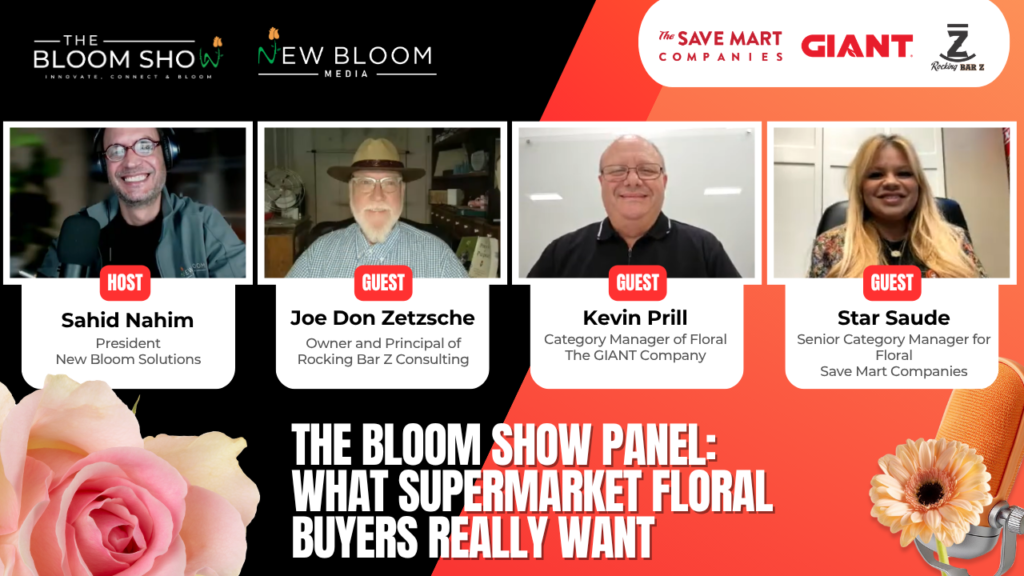
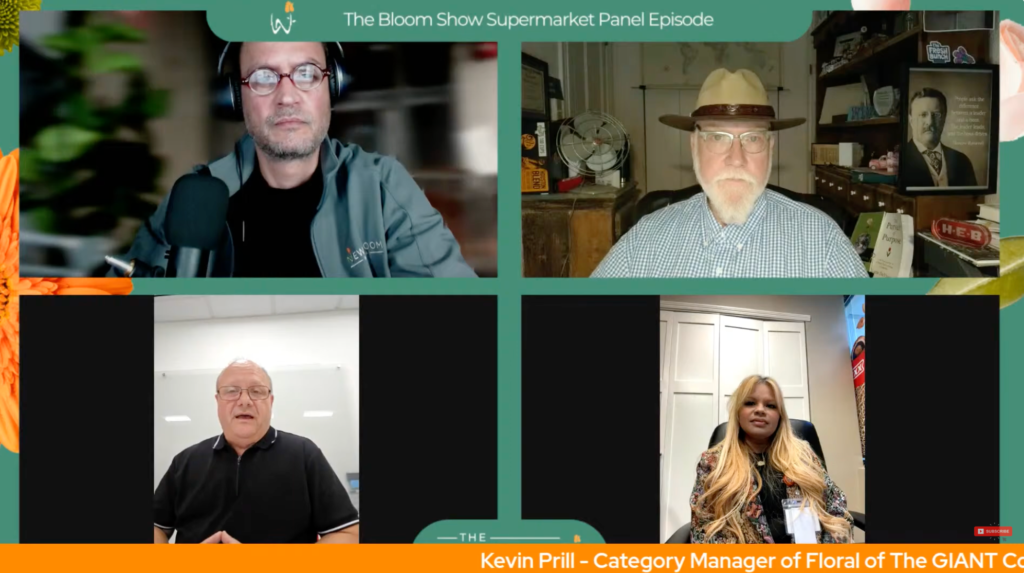
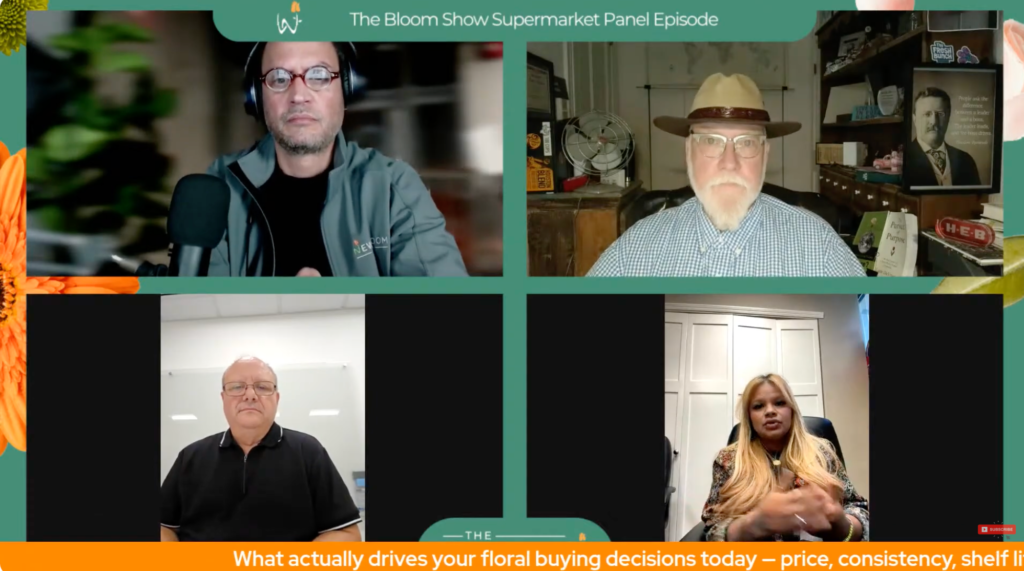
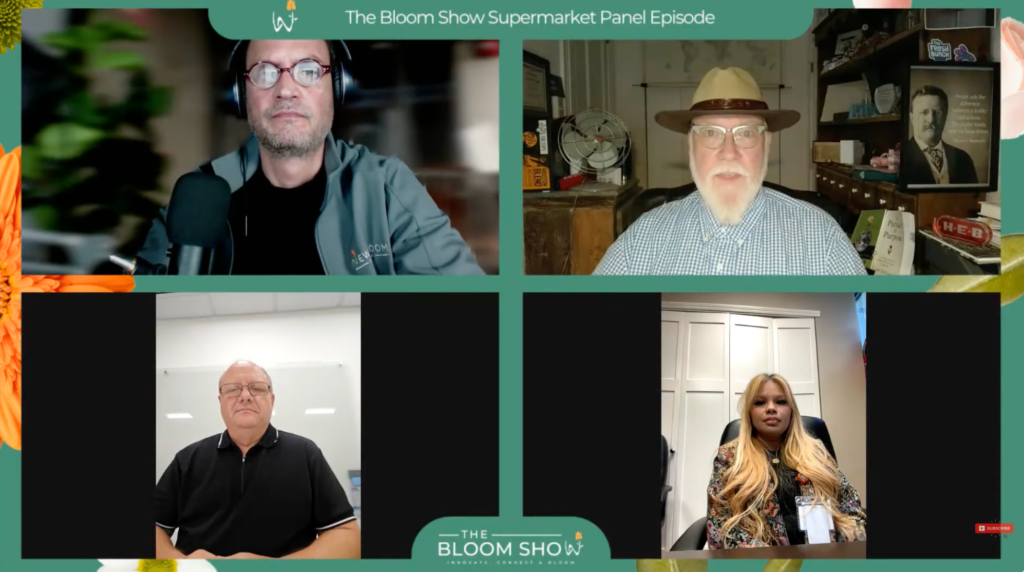
For this episode of The Bloom Show, I had the opportunity to sit down with three people who collectively represent some of the most important knowledge in retail floral: Star Saude of The Save Mart Companies, Kevin Prill of The GIANT Company, and Joe Don Zetzsche of Rocking Bar Z — and former VP of BLOOMS at H-E-B. This was not a surface-level conversation. What made it valuable was the honesty. Buyers rarely share this level of candor publicly, and when they do, the entire supply chain benefits.
We covered everything from supplier relationships and merchandising to cultural consumers, micro holidays, AI, and what growers and wholesalers need to do differently to succeed in supermarket floral. Here’s what stood out.
Relationships Matter More Than a Low Price
This was one of the strongest themes of the entire conversation, and it came through clearly from all three guests. Supermarket floral buying is deeply relationship-driven. It always has been. But the panel reinforced exactly why leading with price or quality comparisons is the wrong approach when trying to break into a new retail account.
Joe Don said it best:
“I don’t recommend to anyone to go to a retail buyer and say, ‘I can do what you’re doing with somebody else for cheaper, or my quality is better. Let me send you samples.’ Those are not going to affect their buying decisions in part because they’ve already built relationships with the people that they trust that are taking care of their business.”
What the panel encouraged instead was identifying genuine gaps in a retailer’s current assortment and bringing solutions that are specific to that customer base. That is the difference between a supplier and a true partner. If you are approaching retail floral buyers without doing that homework first, you are already behind.
Micro Holidays Are Creating Real Opportunities
One of the most energizing moments of the episode was the conversation around micro holidays — and how unpredictable, social media-driven moments are quietly becoming significant sales drivers throughout the year.
Kevin Prill shared something that I think will resonate with a lot of people in this industry:
“We were not prepared for it. It was August 3rd, and our sales from the day before were astronomical. We were like, ‘What the hell happened? Did we miss something?’ … The first thing that came up was a TikTok video of celebrating this holiday that none of us knew about.”
He was talking about National Girlfriend Day. And the follow-up number was even more telling:
“Last year we had 300% increase on that day. Just one day in the middle of August.”
This is the kind of insight that should shift how growers, bouquet makers, and wholesalers think about the calendar. Demand creation is no longer just tied to Valentine’s Day and Mother’s Day. The signals are already out there — you just have to be paying attention.
Cultural Understanding Is No Longer Optional
This part of the conversation hit differently for me. The panel got into how cultural holidays like Día de los Muertos are evolving in the U.S. market, and why authenticity is becoming a real competitive advantage for suppliers who do their homework.
Joe Don framed it this way:
“Younger people are able to access the authentic history of those holidays, and they want to execute that way.”
Star expanded on what that actually means at the buying level, especially in the California Hispanic markets she serves:
“For me, I like my sales grow a lot at Day of the Dead. It’s, you know, it’s more traditional for the Central Valley.”
And when it comes to what customers are actually responding to, she was direct:
“They care about what’s the color, the meaning of that color, which is like that orange, bright, hot pink, yellows that the customers going to buy.”
For growers and suppliers, that is a clear signal. It is not about slapping a themed sleeve on a product. It is about understanding the emotional and cultural meaning behind the purchase. That level of insight should inform planning, color assortment, volume, and how you tell the story of your product to buyers.
AI and Data Could Reshape Floral Retail — But There Is a Problem First
This was one of the most forward-looking moments of the episode, and honestly, one of the most important conversations we need to be having as an industry. Joe Don addressed something that does not get enough attention: the data problem inside floral departments.
“The challenge that we face is that our data is not clean. So we are shipping so many products on assorted UPCs.”
Retailers across every other category are already investing in AI-driven forecasting. Floral is falling behind not because of a lack of technology, but because the underlying data infrastructure is inconsistent. Without clean, detailed UPC tracking by variety and color, floral departments cannot take full advantage of the tools that are already reshaping retail.
This is an opportunity. Growers, wholesalers, suppliers, and retailers who work together on better data transparency now will be far better positioned when AI forecasting becomes standard. That collaboration starts with a conversation — and episodes like this one are exactly where those conversations begin.
Merchandising Still Drives the Sale
Flowers are one of the most impulse-driven categories in the entire store. The panel reinforced what we all know instinctively but sometimes underestimate in practice: how a product is presented matters enormously.
Star put it simply:
“The moment the customer comes into our grocery store and they see it nice and merchandise, they’re going to buy it.”
Kevin added that strong micro-holiday programs are often less about overly themed products and more about creating visually cohesive displays that can carry energy beyond a single day. For suppliers, that means thinking about how your programs are designed to be executed at the store level — not just how they look on a spec sheet.
Final Thought
What I appreciated most about this episode was not just the information — it was the willingness of all three guests to be genuinely open about what they need, what does not work, and where the industry still has room to grow.
At New Bloom Media, this is exactly why we create content like this. Stronger partnerships begin with a better understanding of each other’s realities, constraints, and opportunities. Flowers move through a system, but they land in moments. That is worth the conversation.
Watch the Full Episode
To hear the full conversation with Star Saude, Kevin Prill, and Joe Don Zetzsche, watch the complete episode of The Bloom Show on YouTube.

Upcoming Shows on The Bloom Show
The Bloom Show continues with upcoming episodes featuring:
- May 15, 2026, at 1 PM EST: The Bloom Show Correspondent: Tim Huckabee | EP. 8 – Flower Shop Best Practices for Sales Growth
- May 19, 2026, at 1 PM EST: The Bloom Show: How Local Flowers Are Transforming the Floral Industry with Debra Prinzing
- May 21, 2026, at 1 PM EST: The Penny and Ace Show: Designer’s Choice – Turning Random Stems into Art
Looking for more floral business insights and exclusive Bloom Show content? Subscribe to our newsletter. Want to collaborate, be featured, or share your perspective in a future episode? Contact us today.