

For years, I’ve sat in many meetings where the same question kept coming up across every sector of the industry: “How do we create new business?” It wasn’t coming from one segment—it was coming from everyone. It showed up in different conversations, different formats, but the underlying concern was always the same: growth felt limited to certain moments, and the rest of the year felt underutilized.
Growers, wholesalers, florists, distributors—everyone was asking the same thing. And more specifically: “How do we get a calendar that shows all the opportunities?” Not just the obvious ones, but the ones that are easy to miss. The ones that don’t show up in traditional planning conversations but still influence buying behavior.
Because if you don’t see the opportunities, you can’t act on them. Visibility drives action. And without a clear view of when and where demand can be created, the industry defaults to what it already knows.
So we built one.
But this is not just about a calendar.
This is about how the floral industry thinks about growth—and more importantly, how it needs to evolve if we want to move beyond the limitations we’ve been operating within for years.

The Problem Isn’t Marketing
The floral industry doesn’t have a marketing problem. It has a demand creation problem. This distinction matters because if we misdiagnose the problem, we continue to apply the wrong solutions.
We’ve become very good at focusing on the same floral holidays:
- Valentine’s Day
- Mother’s Day
These moments are deeply ingrained in how the industry operates. They drive planning cycles, production decisions, staffing, logistics, and marketing strategies. They are important—and they will always be important.
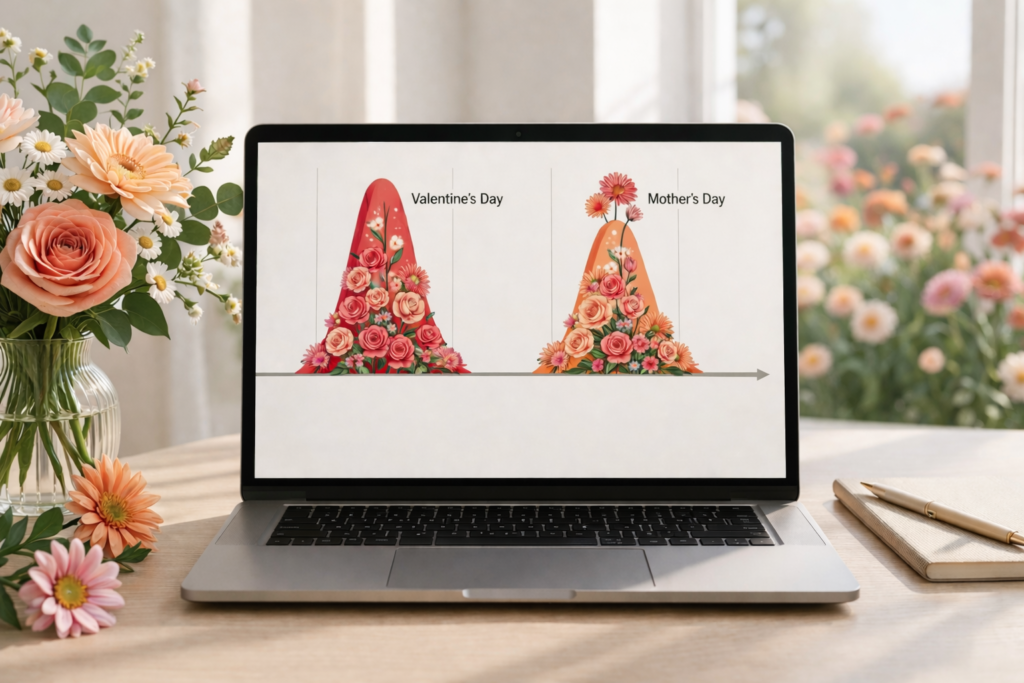
And because of that, we’ve built a system that depends on peaks. The entire supply chain is optimized around a few high-performance windows, where volume is high, and execution is critical.
If we continue to rely only on major floral holidays, we stay in the same place. Growth becomes limited by the size of those moments, rather than expanded by new ones.
Sales become concentrated. The pressure increases. The risks increase. And the rest of the year becomes underutilized, even though the opportunity is still there.
We are good at capturing demand—but not creating it. And that’s the gap.
The Shift We Need to Make
The question is not: “How do we sell more flowers?”
The real question is: “How do we create more reasons to buy flowers?”
Because selling more within the same moments will always have a ceiling. But creating new reasons expands the entire market.
Growth will not come from making big holidays bigger. There is only so much you can stretch those moments before diminishing returns begin to show.
Growth will come from creating more buying moments throughout the year. Moments that feel relevant, timely, and meaningful to the customer, not just operationally convenient for the industry.
Because the opportunity is not in a few days—it’s in consistency.
Flowers should not only live in major floral holidays. They should live in everyday occasions, in smaller gestures, in moments that feel personal and spontaneous. That’s where frequency is built, and frequency is what drives sustainable growth.
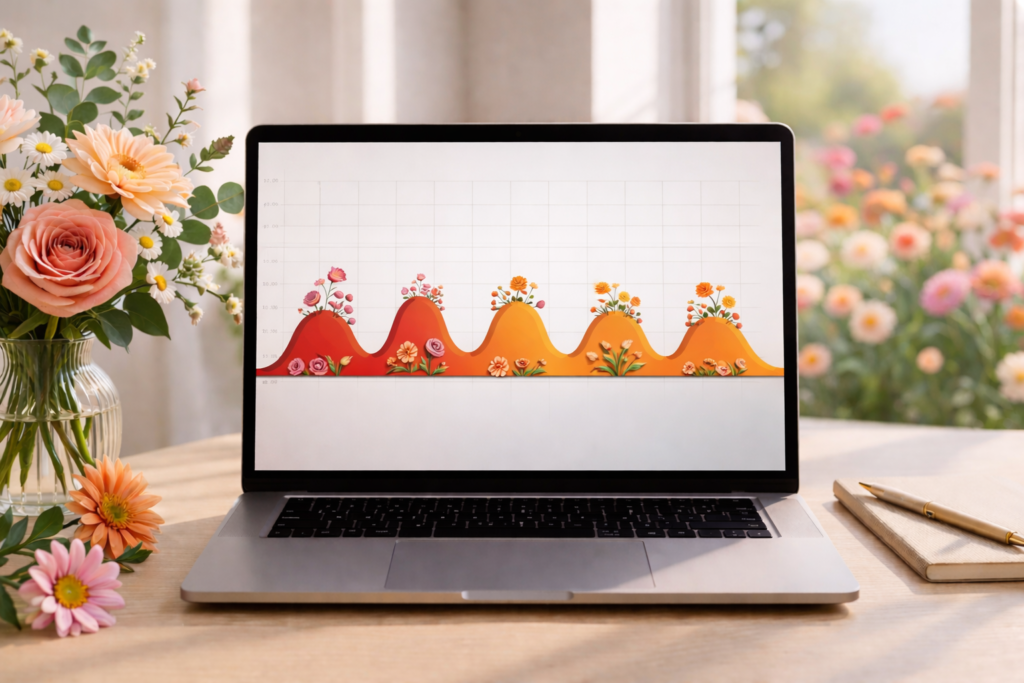
Understanding Floral Micro Holidays
This is where floral micro holidays come in.
Floral micro holidays are:
- Smaller moments
- Cultural occasions
- Religious holidays
- Viral and community-driven days
These are not tactics. These are not promotions. These are not last-minute marketing ideas created to fill gaps.
These moments already exist. The industry doesn’t need to invent all of them—it needs to recognize them, organize them, and act on them.
They are intentional moments that create buying behavior. Each one represents a reason. A trigger. A context for purchase.
And when you create more reasons, you create more frequency. That’s the key shift.
This is how demand is built—not through pressure, but through relevance.
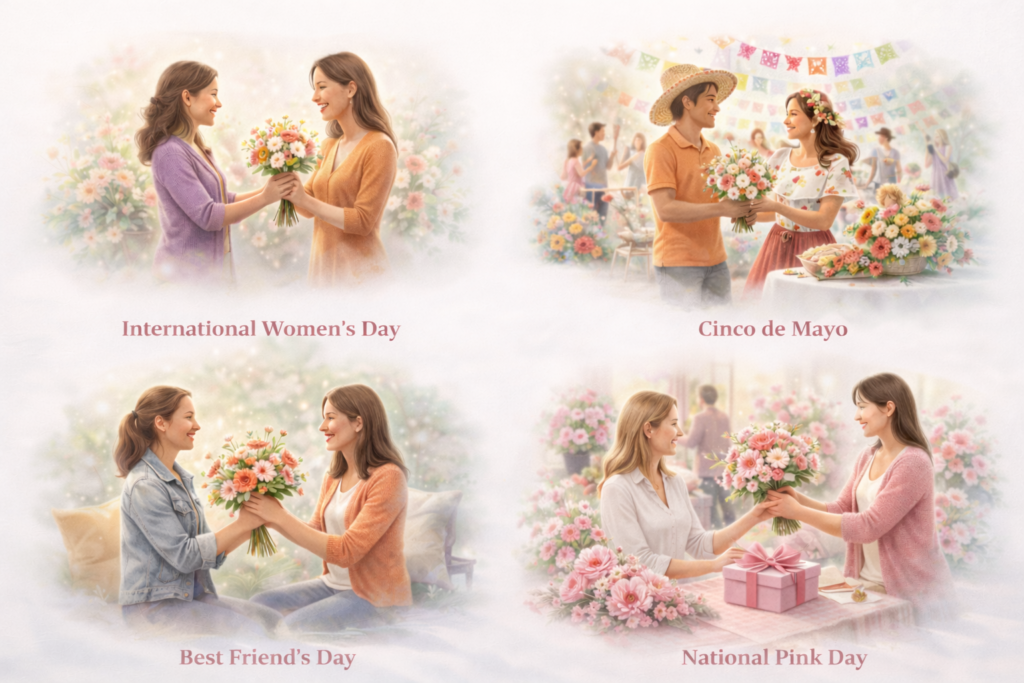
So the Question Becomes—How Do We Structure This?
If these opportunities exist, the challenge is not finding one.
The challenge is seeing all of them clearly, seeing how they connect. Seeing how they fit into a broader strategy instead of treating them as isolated moments.
This is where a floral industry professional calendar becomes important.
Not just a list of dates. Not just something to glance at once and forget.
But a structured tool that helps the industry understand:
- floral holidays
- floral micro holidays
- religious and cultural moments
- emerging and alternative flower holidays
It becomes a framework for planning, alignment, and decision-making—not just a reference.
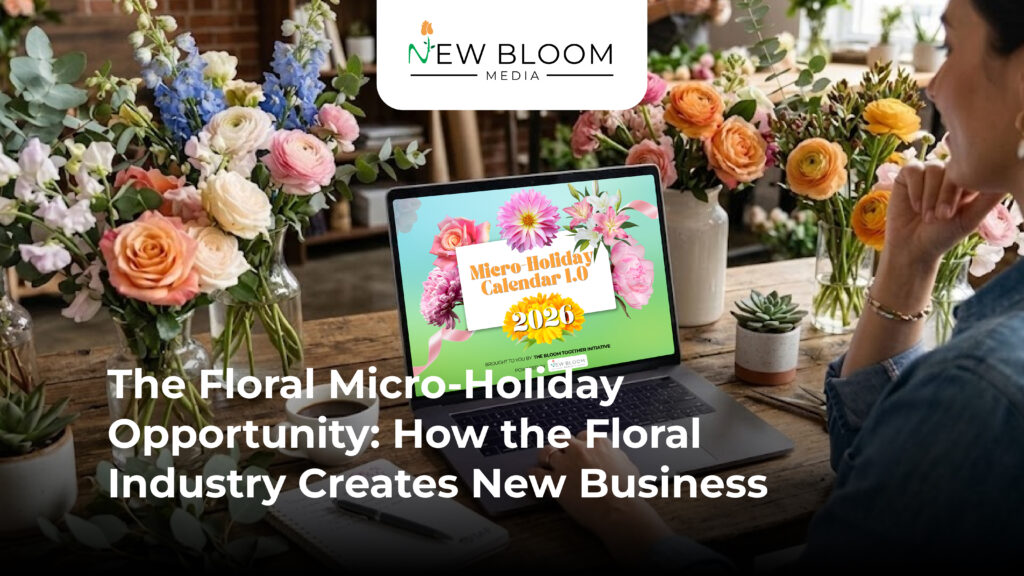
The Micro-Holiday Calendar 1.0 was created as a starting point, not as a final solution, but as a foundation.
A tool to organize these opportunities and bring visibility to what already exists.
It brings together a wide range of floral holidays and floral micro holidays, along with general insights on flower types and color associations—so the industry can begin to see patterns, not just dates.
Why This Matters for the Entire Industry
This is not just for florists.
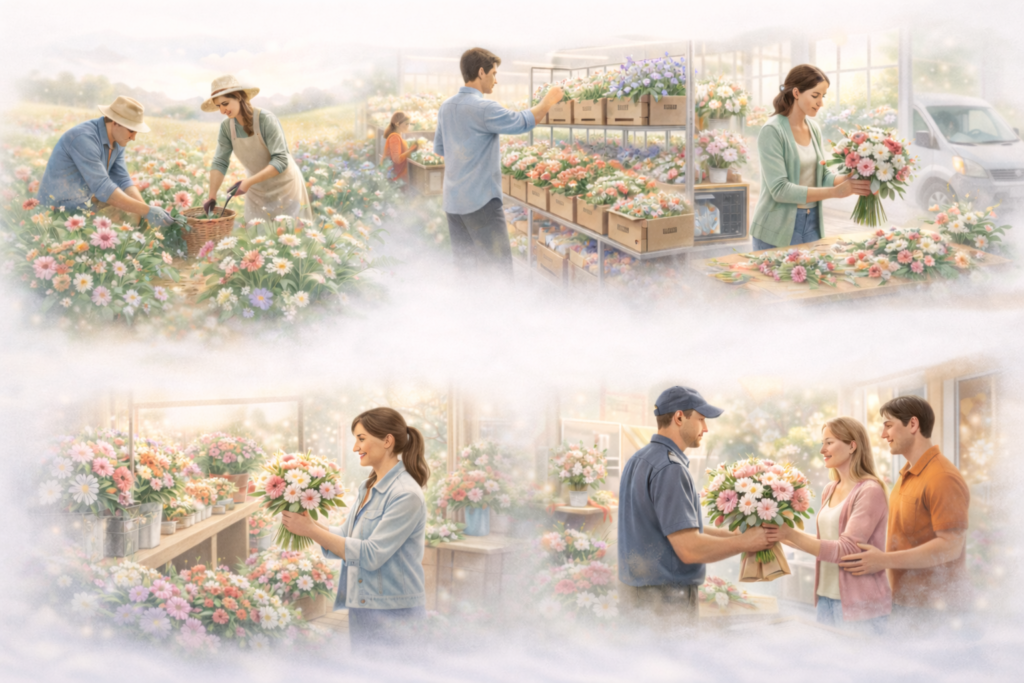
If a grower understands the calendar, they can plan and guide demand more strategically, instead of reacting to last-minute shifts.
If a wholesaler understands it, they can position the product with more intention and communicate more effectively with their customers.
If a distributor understands it, they can align supply with demand and create a more consistent flow instead of dealing with extreme peaks and slow periods.
The more the industry understands these moments—and acts with intention—the more consistent business becomes.
Consistency reduces pressure. It improves planning. It strengthens relationships across the supply chain.
This is not about one company.
This is about alignment across the entire supply chain—and what happens when everyone begins to operate with the same visibility and intent.
The Real Opportunity
Because awareness without a reason doesn’t always convert. People may appreciate flowers, they may even love them—but without a clear moment or trigger, that appreciation doesn’t turn into a transaction.
Because the future is not built on a few strong days. Relying on a handful of peak holidays limits the industry’s ability to grow beyond its current boundaries and keeps performance tied to a narrow window of time.
It is built on consistent demand throughout the year. And consistent demand only happens when the industry intentionally creates and supports more buying moments that feel relevant in everyday life.
More moments.
More relevance.
More reasons to buy.
These are not just ideas—they are the building blocks of a healthier, more stable industry. When these elements come together, they create a system where demand is not forced, but naturally occurring.
This is where the real shift happens—from reacting to the market to shaping it. From waiting for demand to building it. And from operating in cycles, to operating with continuity.
Final Thought
We’ve spent years asking how to sell more flowers. It’s been the central question across meetings, strategies, and conversations throughout the industry.
But the real opportunity has always been there. Not hidden, not out of reach, but simply overlooked because we’ve been focused on the same patterns for so long.
Not in doing more marketing for florists. Not in pushing harder during the same holidays or increasing pressure on already high-performing moments.
But in recognizing more floral holidays and floral micro holidays, and creating reasons for people to buy. In expanding the landscape of occasions so that flowers become part of more moments, not just the traditional ones.
Because when the reason exists, the sale follows.
And when that process repeats—when reasons are consistently created and recognized—buying behavior begins to shift.
What starts as occasional becomes habitual. What feels like an extra becomes something expected.
And over time, that’s what transforms the industry.
Not a single holiday.
But a collective shift in how we create, recognize, and act on opportunities
That’s how we move forward—together.