

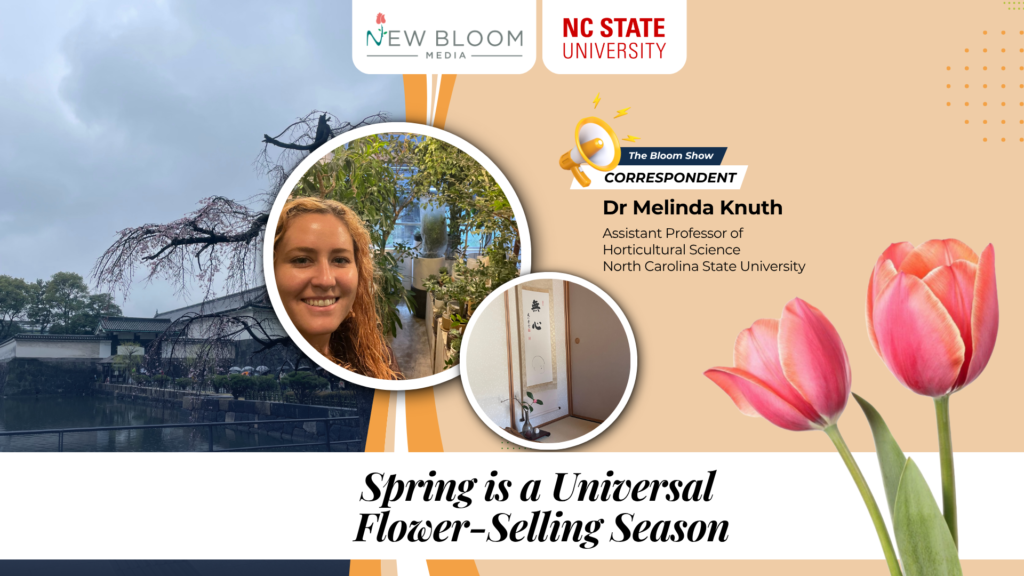
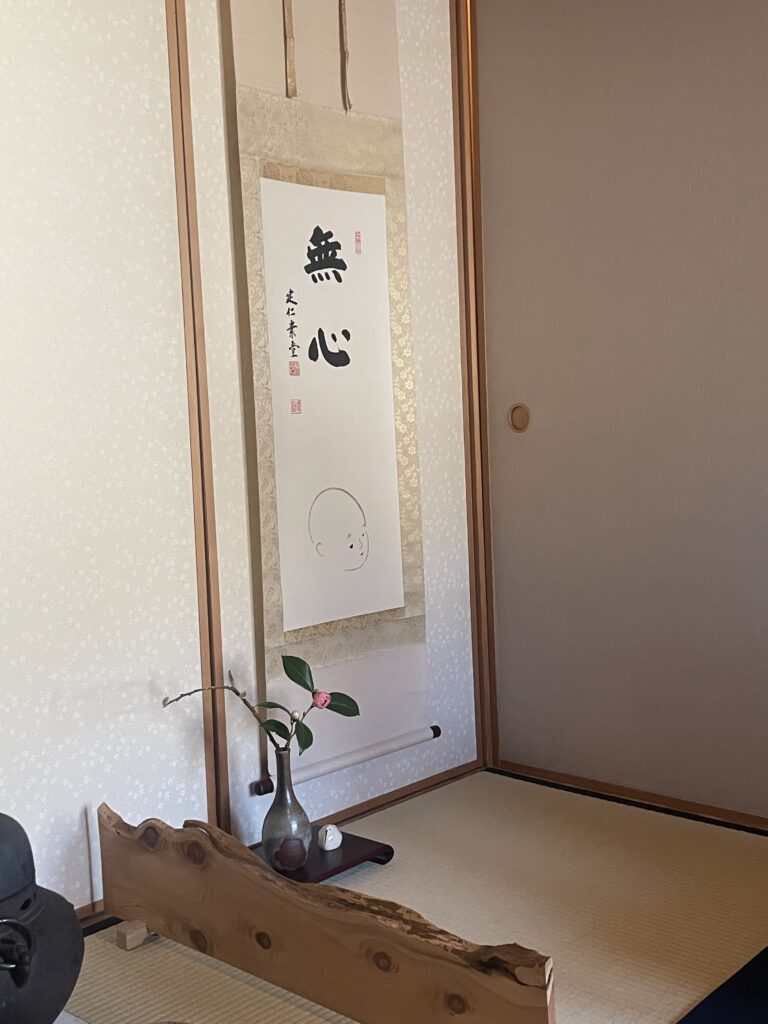
Konnichiwa! I have had the pleasure of visiting Japan this month, and I wanted to share my perceptions. I am always impressed by the incredible amount of symbolism everything has in Japan. There is an innate belief that all things have meaning, taken from a Shinto concept called Yaoyorozu no Kami, where spirits or deities reside in everything from natural elements to abstract concepts. There’s a second term that further encompasses this culture called Yūgen, where there is a profound, mysterious grace in the universe; there is something deeper than visible to the eye. This yūgen was exemplified in a tea ceremony I participated in, where a single camellia branch was the Ikebana floral centerpiece in the room, with a pink bloom just beginning to open. The flower represented respectful, elegant grace for us to focus on and to forget everything outside of the room. Needless to say, I was impacted. I wonder sometimes how we can make such an impact and symbolism with simple beauty in our lives and businesses. We have a sentimental culture that is sometimes pushed to the side in the pursuit of our ambitions. I would encourage you to take a moment each day to slow down and observe your equivalent of the camellia bloom.
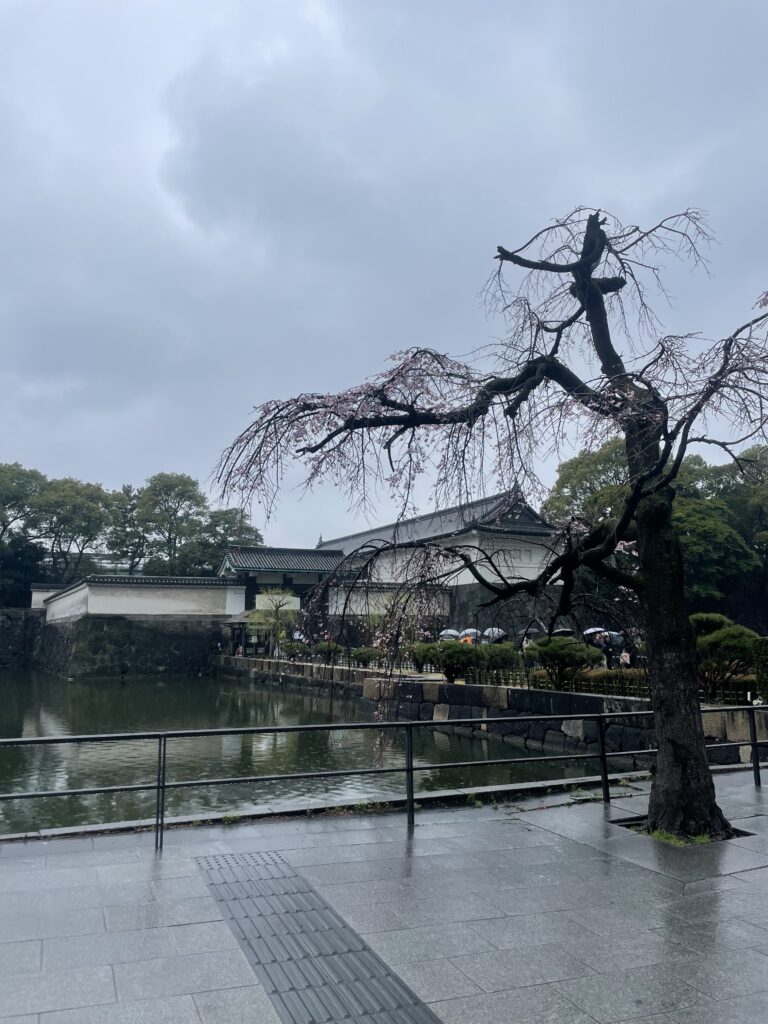
Like in North Carolina, plants have begun to break bud in Japan. The iconic cherry blossoms (sakura) have been brilliant and, surprisingly, quite fragrant. I have loved walking by home gardens and getting a whiff of the sakura. This trip has been the opportunity for me to connect with horticulture researchers, but also to experience flower marketing during their big sales season. Unlike in the United States, the Japanese don’t have the equivalent of Valentine’s Day or Mother’s Day. Instead, they have a series of spring holidays that consist of a portion of their floral sales. These holidays range from religious, Buddhist, and Shinto, to seasonal blooming flower time periods. From March until early June, these time periods boast colorful bouquets and arrangements and improved spirits from the winter blues. In addition, routine, daily purchasing seems to be the normal here, like in some European cultures I have visited before.
Some research has shown that Americans are moving to more self-purchasing, which we have seen over the past 10 years. This would lead to the ability for more routine daily purchasing and open the marketing opportunity to nudge flowers into a household necessity. This would be ideal, no?! Perhaps the Japanese are on to something.
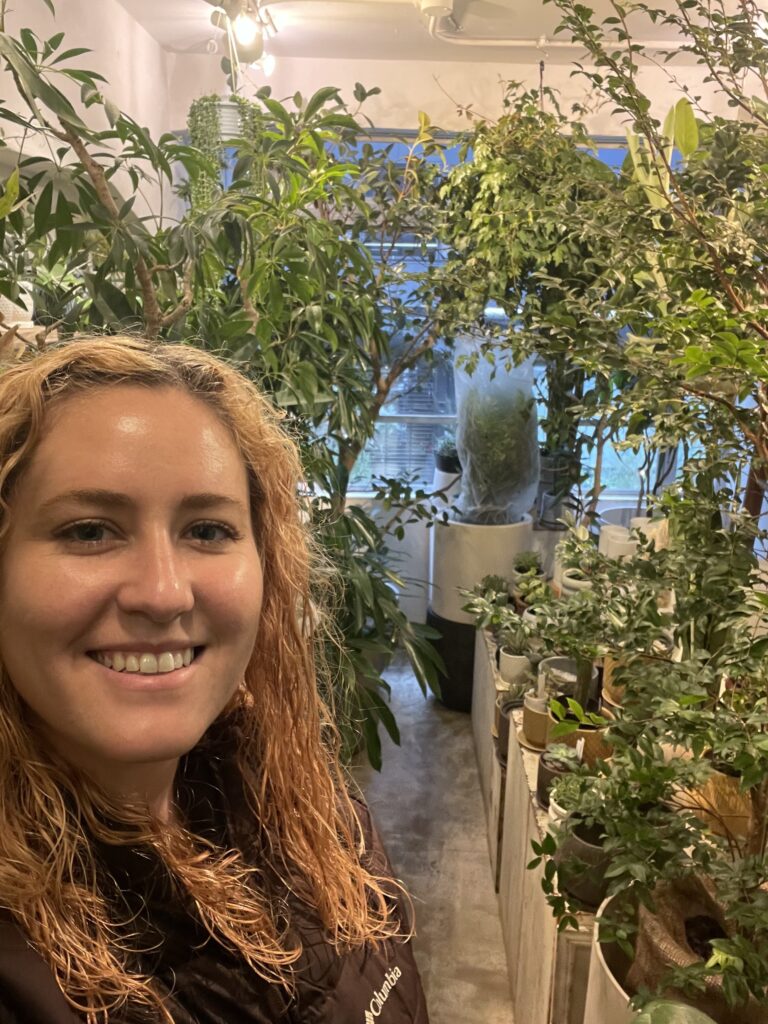
The last marketing piece I want to touch on is the positioning. I have seen almost no signs. This was intriguing to say the least. It appears that since the flowers themselves, the colors of the flowers, and the time of season all have individual meanings that are deeply ingrained in their culture, little is required to market the flowers themselves. You just must be available and visible to sell the flowers, and they do all the talking for the retailer. Flowers are deeply embedded in their culture. I wonder how we can borrow some inspiration from the Japanese in how they view flowers and quietly let the flowers speak for themselves in their marketing. Although we have many cultural differences and not all can be transferred, the meaning of Yaoyorozu no Kami and Yūgen concepts may embed flowers into sentimental American hearts.
Mata ne!
About the Author
Dr. Melinda Knuth is an Assistant Professor at North Carolina State University and a leading researcher at the intersection of people and plants, with a focus on consumer behavior, economics, and supply chains in the floriculture industry. Her work has been widely recognized, including GPN Magazine’s 40 Under 40 award (2021), an AmericanHort Scholarship (2017), and her article What the Research Says About Millennials and Houseplants ranking as one of the top 10 most-read in Greenhouse Product News (2022). Most recently, her poster on AI literacy in horticulture students was voted Outstanding Poster at the 2025 NCSU Conference of Faculty Excellence. Beyond research, she serves as Division Chair of Horticulture for Development with the International Society for Horticulture Science and as a GenNext Lead with AmericanHort.
Published by New Bloom Media
New Bloom Media (NBM) is the first multi-channel B2B media platform dedicated solely to the floral industry across the Americas. Through thought leadership, industry insights, and collaborative storytelling, NBM helps businesses innovate, connect, and thrive.
Want more floral industry insights?
Subscribe to our newsletter for exclusive interviews, market updates, and innovation spotlights delivered straight to your inbox.