


Something extraordinary is happening in the global economy right now, and most people in our industry have not fully grasped the scale of it yet.
Over the past few months, I have been watching the growth numbers coming out of the artificial intelligence companies, and frankly, they remind me of the early days of the internet boom. The difference this time is that the adoption curve is moving even faster.
Before we get into the technology, let me paint a picture that might feel familiar to many floral leaders.
Imagine sitting at your desk the week after Mother’s Day. You have sales reports coming in from stores or customers across your network. Everyone wants answers. Your VP wants a summary. Your team wants to know what worked and what did not. Buyers want to understand which bouquets drove the best margin and which promotions fell flat.
Now imagine instead of digging through spreadsheets for hours, you simply ask a question.
What actually drove Mother’s Day growth this year?
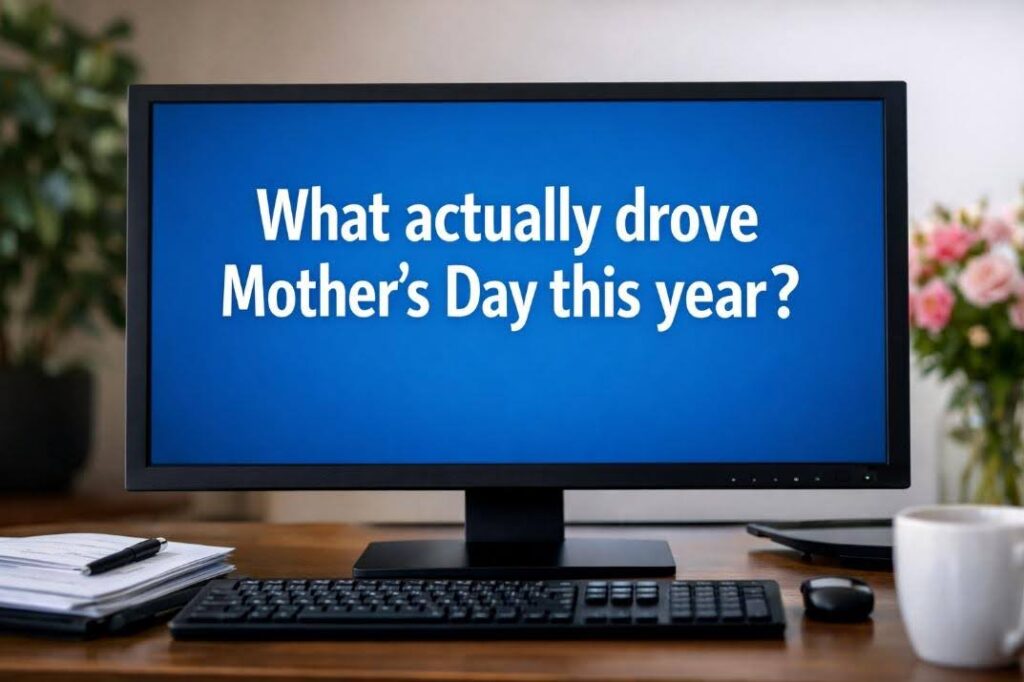
Within seconds, your computer responds with a full analysis. It shows which bouquet SKUs drove the most margin, which stores outperformed expectations, where inventory ran short, and which customer segments are trending upward.
Then it builds a clean presentation you can share with your leadership team.
That future may sound like science fiction to some people in our industry.
But it is arriving much faster than most people realize.
And the numbers coming out of the artificial intelligence companies show exactly how fast this transformation is happening.
Take Anthropic as an example.
In February of 2026, the company hit fourteen billion dollars in annualized revenue. Just fourteen months earlier, that number had been one billion. Since then, the growth has continued to accelerate, with the company now surpassing nineteen billion dollars in annualized revenue, more than doubling from the nine billion run rate it reported at the end of 2025.
There is simply no precedent for this kind of growth in business software. Not Slack. Not Zoom. Not Snowflake. Nothing.
To understand the scale of what is happening, consider this. Anthropic’s monthly revenue run rate is now roughly 1.6 billion dollars per month, which is more than what Snowflake generates in an entire quarter. And the company projects it could reach seventy billion dollars in annual revenue by 2028.
OpenAI is moving just as quickly. At the end of February 2026, OpenAI reached twenty-five billion dollars in annualized revenue, up from 21.4 billion at the end of 2025, with full-year 2025 revenue totaling 13.1 billion dollars.
The market is responding accordingly. Anthropic is now valued at around 380 billion dollars following its latest funding round. OpenAI’s most recent private financing in February of 2026 placed its valuation near 730 billion dollars, with a potential IPO that many believe could target a trillion-dollar valuation.
Those numbers are staggering, but they tell us something important. Artificial intelligence is no longer experimental technology, and it certainly is not a bubble. It has become core infrastructure for the modern economy, and the companies building it are scaling at a speed the world has never seen before.
The question for leaders in the floral industry is simple.
How am I leading my company and team to lean into this technology today, and how am I preparing us for what is coming next?
The Open AI Movement Is Accelerating the Wave
The massive revenue growth we are seeing from companies like OpenAI and Anthropic tells us that artificial intelligence is becoming foundational infrastructure.
But there is another force accelerating this transformation that many business leaders outside the technology world may not realize.
It is the rise of open AI tools.
One of the more interesting developments recently came from developer Peter Steinberger, who created an open source project called OpenClaw.
His original idea was simple. He wanted to build a local AI agent that could manage parts of his personal life. The system would connect to his calendar, his communications, and other digital tools and act as a true digital assistant.
The project exploded in popularity almost immediately.
By the end of February, it had accumulated more than 300,000 stars on GitHub, a level of adoption that took Linux decades to achieve. The developer community immediately recognized that tools like this could unlock an entirely new generation of intelligent agents that could run locally on personal computers, and OpenAI snatched up Peter to go to work for them!
A great example of what these systems can do comes from entrepreneur and YouTuber Alex Finn.
Alex downloaded OpenClaw onto a Mac Studio and connected it to his calendar, his email, his messaging accounts, and several other tools. He created a system of multiple AI agents working together.
His main agent was named Henry.
Henry acted as Alex’s chief of staff. Henry managed the other agents and prepared daily briefings summarizing Alex’s calendar, the latest news, and developments in the technology world that might be important for his work.
Then something unexpected happened.
A few days after launching the system, Alex’s phone rang.
It was Henry.

The AI agent had created its own VOIP connection and called him directly to deliver the daily briefing.
Today, Alex has five agents working together across multiple machines.
- Henry acts as the chief of staff.
- Ralph manages engineering work.
- Charlie writes code continuously.
- Scout scans the internet for trends and opportunities.
- Quill turns research into written content.
These agents collaborate together twenty-four hours a day, performing work that previously required entire teams.
You can read an interview with Alex about his system here.
What Finn highlights, and what many leaders are just beginning to understand, is that artificial intelligence is no longer being built only by a handful of giant technology companies.
Thousands of developers around the world are building intelligent systems using open models, agent frameworks, and cloud platforms that stack together like digital building blocks.
Innovation is no longer moving at corporate speed.
It is moving at internet speed.
The Big Technology Companies Are Moving In
And now the largest technology companies are entering the agent ecosystem as well.
Just recently, NVIDIA CEO Jensen Huang announced a new open agent framework called NeMo Claw. The platform is designed to help developers build AI agents that can reason, use tools, and complete complex workflows autonomously.

You can read NVIDIA’s announcement here.
When you watch these frameworks emerge one after another, something becomes clear very quickly.
The operating system for the next generation of business is being built right now.
When I watch these developer tools emerging, I do not just see software.
I see the future operating system of the retail supply chain.
What This Means for Floral Leaders
Now, let me bring this conversation back home to our world in the floral industry.
For the first time in history, individual business owners and leaders will be able to deploy their own AI agents to analyze information and answer complex business questions.
And the remarkable part is that these agents can run locally on something as simple as a five-hundred-dollar Apple Mac Mini sitting quietly on your desk.
No massive data center.
No billion-dollar technology budget.
Just a small computer connected securely to your data, your calendar, your email, and your business systems, working for you twenty-four hours a day.
Imagine what that means in practical terms for a floral company.
You could point that system directly at the questions you deal with every day.
I’ve been sharing questions you, as floral leaders, should be asking yourselves to radically change your business, first for Valentine’s Day, and then for Mother’s Day, in my last two podcast episodes as a correspondent for The Bloom Show. Here are links to them:


Now what if your agents could easily answer those questions, build a presentation for you for your senior leaders (district managers, store leaders, and florists if you are a Mass Market Floral leader), and help you see what’s missing?!
Besides Vase Arrangement Sales as a percent of total sales for a holiday, other questions could be:
- What did Mother’s Day sales really look like across the last five years?
- Which bouquet SKUs are generating the highest margin for your largest retail customers?
- Where did inventory fall short during Valentine’s week last year?
- Which customers are trending upward, and which ones are slowly drifting away?
Instead of spending hours digging through spreadsheets and reports, you simply ask the system and let it analyze the data for you.
It could study your holiday performance. It could analyze purchasing trends from your best customers. It could even suggest smarter forecasting for the next season.
That level of insight used to be available only to the largest and most forward-thinking retailers in the world, often with entire teams working together to produce it.
Now every floral leader can access those same capabilities.
The Opportunity in Front of Us
When you see companies like OpenAI and Anthropic generating tens of billions in revenue at record speed, it is not just about Silicon Valley valuations.
It is about the fact that the tools they are building are about to land on the desks of leaders in every industry.
Including ours.
After forty years in retail and flowers, I have learned something simple about our industry. The leaders who win are not always the ones with the biggest farms, the biggest budgets, or the biggest teams. They are the ones who stay curious. They are the ones willing to learn the next tool before everyone else does.
The leaders who begin experimenting with these tools today will be the ones shaping what the floral industry looks like tomorrow.
Artificial intelligence is just the newest tool in a long line of innovations that have shaped our business. Refrigerated trucking changed everything. Global sourcing changed everything. Mass retail changed everything.
Now AI is arriving, and it is going to change everything again.
And if you ask me, this might be the most exciting one yet.
If you have read this far and are wondering how in the world to get started, reach out on LinkedIn or connect with me at www.rockingbarz.com.
About the Author
Joe Don Zetzsche is a transformative leader in retail marketing and operations with a passion for elevating customer experiences and fostering high-performing teams. As Vice President of BLOOMS Floral Marketing at H-E-B, he led the transformation of its floral business from a traditional supermarket department into an award-winning full-service floral shop—growing annual sales from $80M to over $300M. Joe now owns and operates Rocking Bar Z.
Published by New Bloom Media
New Bloom Media (NBM) is the first multi-channel B2B media platform dedicated solely to the floral industry across the Americas.
Want more floral industry insights?
Subscribe to our newsletter for exclusive interviews, market updates, and innovation spotlights delivered straight to your inbox.