


Understanding the principles and elements of floral design is essential. These are the building blocks that transform blooms into a work of art that evokes emotion, harmony, and beauty.
Floral design is more than simply placing flowers in a container—it is an art form built on intention, creativity, and structure. The principles and elements of floral design serve as the foundation for every successful arrangement, guiding you in transforming individual blooms into expressive works of art. By understanding how line, form, color, and texture work together and how balance, proportion, rhythm, and unity bring them into harmony, you can create arrangements that evoke emotion, communicate style, and capture beauty with purpose.
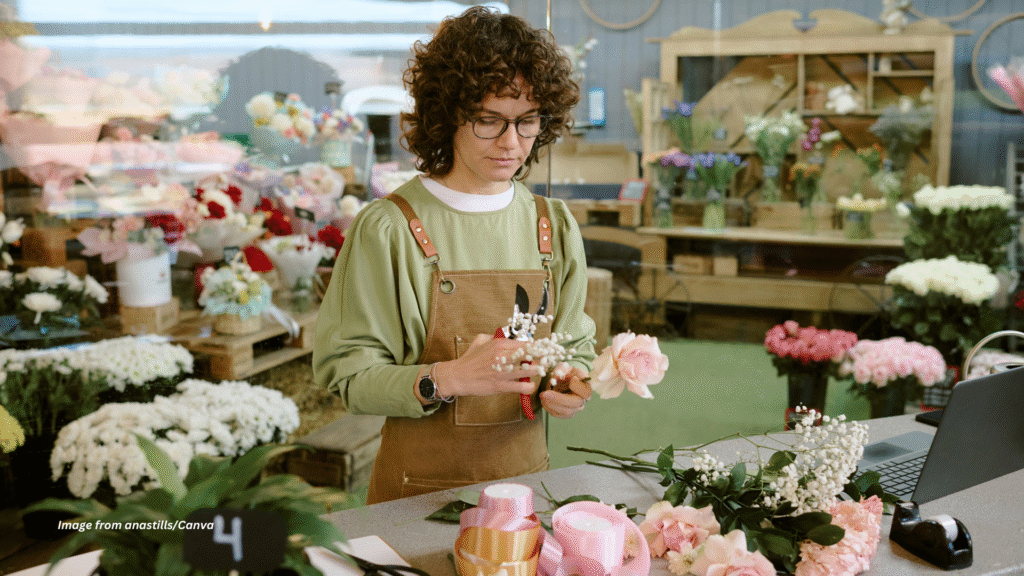
What Are the Elements of Floral Design?
The elements are the basic visual components used to create a floral arrangement. They are the “ingredients” of design.
- Line. The line defines the visual path the eye follows through a design—whether it’s curved, straight, or cascading. It gives direction and structure to an arrangement.
Importance: Lines guide the viewer’s eye and create flow, movement, and energy in your design.
- Form. Form refers to the shape and structure of the arrangement as a whole and of each flower or container within it. Importance: It establishes the arrangement’s overall silhouette and style—compact, triangular, oval, asymmetrical, or free-form.
- Space. Space is the area around, between, and within the components of the design.
Importance: It prevents overcrowding, giving each bloom room to “breathe,” enhancing balance and focus.
- Texture. Texture describes the surface quality—smooth, rough, glossy, or velvety—of flowers, foliage, or accessories.
Importance: Contrasting textures create visual interest and richness in a design.
- Pattern. Pattern is the repeated combination of forms, lines, or colors.
Importance: It creates rhythm and consistency, making arrangements visually cohesive.
- Color. Color sets the mood of an arrangement. It involves hue, value (lightness/darkness), and intensity (brightness/dullness).
Importance: The color palette affects the emotional response—calm, excitement, romance, or joy—and helps unify the entire design.
- Size. Size refers to the overall scale of the arrangement and the proportion of each component.
Importance: Proper sizing ensures the design fits its space and maintains pleasing proportions between flowers, container, and setting.
- Fragrance. Fragrance adds a sweet or pleasing odor, or scent perceived by the sense of smell. Importance: Smell is the element that triggers memory, which creates emotion. Scent attracts flower buyers.
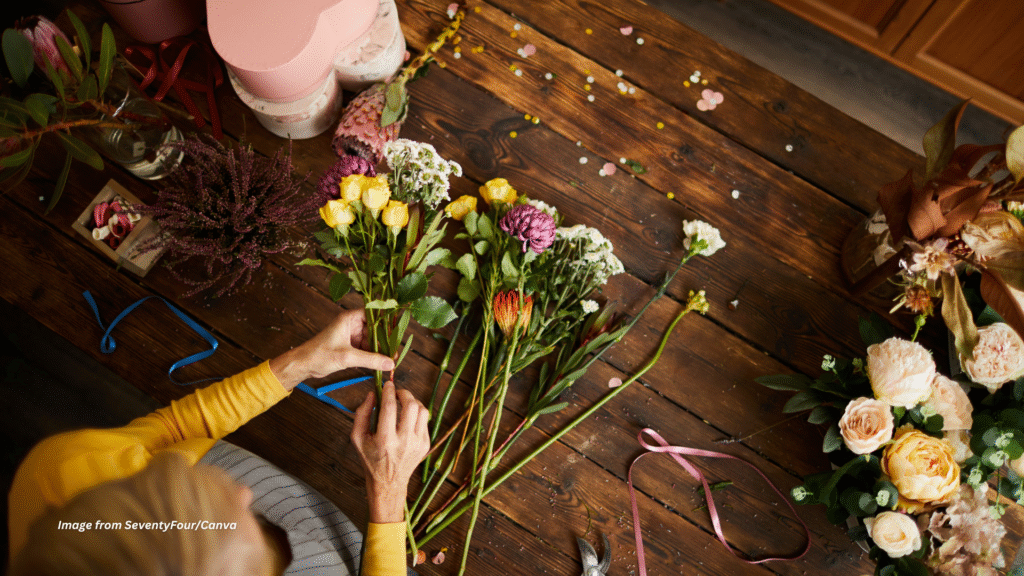
What Are the Principles of Floral Design?
The principles are the guidelines that help you organize and balance the elements into a harmonious composition.
- Balance. Balance is the sense of visual stability in a design—either symmetrical (formal) or asymmetrical (informal)
Importance: It ensures the arrangement looks stable and pleasing, not top-heavy or uneven.
- Proportion. Proportion refers to the relationship of sizes between different parts of the design—flowers, foliage, and container.
Importance: Correct proportion ensures harmony and prevents elements from overpowering each other.
- Rhythm. Rhythm gives the design movement, leading the viewer’s eye throughout the composition.
Importance: It creates flow and keeps the design dynamic rather than static.
- Contrast. Contrast highlights differences in color, texture, or shape.
Importance: It draws attention and prevents monotony, giving the arrangement depth and character.
- Harmony. Harmony occurs when all elements and materials complement each other.
Importance: It ensures every component feels like part of the same story.
- Unity. Unity is the overall oneness of a design—the sense that everything works together as a single, complete composition. Importance: It gives the arrangement a finished and professional look.
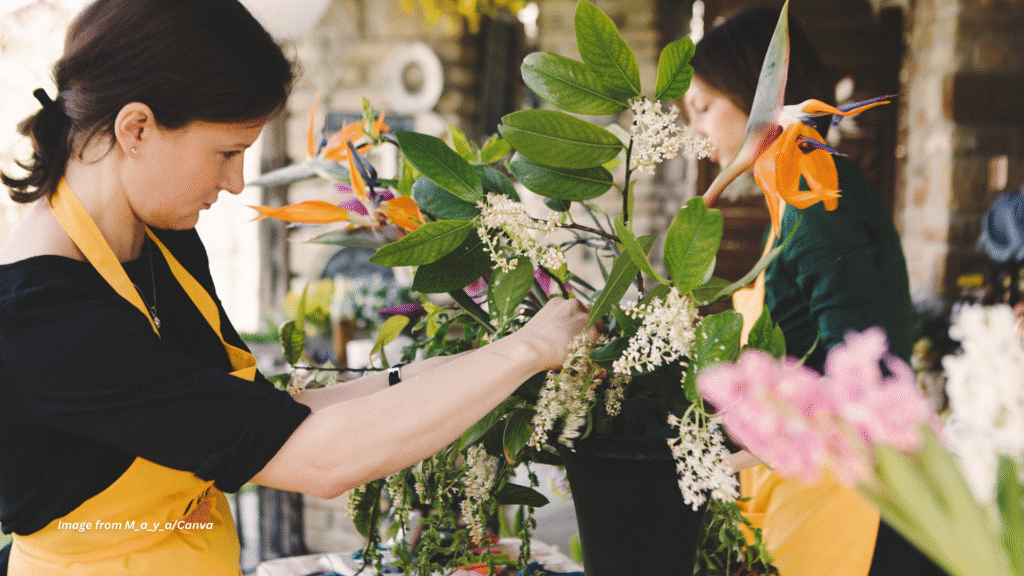
Mastering the principles and elements of floral design allows designers to move beyond assembling flowers and into creating meaningful compositions. Each element provides the visual ingredients, while the principles offer the guidelines needed to organize them into a cohesive and balanced design. When thoughtfully applied, these fundamentals work together to create arrangements that are visually appealing, emotionally engaging, and professionally executed. A strong understanding of these foundations ensures that every floral arrangement tells a beautiful and unified story.
About the Author
Nita Robertson, AIFD, is a floral industry leader, educator, and creative professional with more than 20 years of experience. A Certified Floral Designer since 2014 and inducted into AIFD in 2015, she has held leadership roles, including Teleflora Education Unit Past President, AIFD Northwest Regional Past President, and currently serves as National Marketing Committee Chair. Nita owned Santa Cruz Floral for 17 years before becoming Publisher and Sales Manager at Florists’ Review Media Group (2021–2025), where she combined editorial leadership, advertising strategy, and design education to grow engagement across print and digital platforms. Today, she continues to inspire and strengthen the floral community nationwide as one of the industry correspondents for New Bloom Media.
Published by New Bloom Media
New Bloom Media (NBM) is the first multi-channel B2B media platform dedicated solely to the floral industry across the Americas. Through thought leadership, industry insights, and collaborative storytelling, NBM helps businesses innovate, connect, and thrive.
Want more floral industry insights?
Subscribe to our newsletter for exclusive interviews, market updates, and innovation spotlights delivered straight to your inbox.