


Valentine’s Day remains one of the most defining moments of the year for the floral industry. It is a period when growers, wholesalers, and florists move in sync under intense timelines, customer expectations, and logistical pressure.
Earlier this year, New Bloom Media gathered feedback from florists across North America through two industry surveys conducted around the Valentine’s season. These florist survey insights offer a snapshot of how retailers prepared for one of the industry’s most important floral holidays—and what the experience reveals about the floral supply chain moving forward. This Valentine’s Day 2026 floral industry report brings together these signals to help the industry better understand how the season unfolded across retail.
What emerges from these responses is a story of operational resilience, familiar consumer patterns, and several signals that may help guide the industry as the year continues to unfold. These floral industry insights also highlight how retailers and suppliers continue to adapt to evolving florist demand trends across major floral holidays.
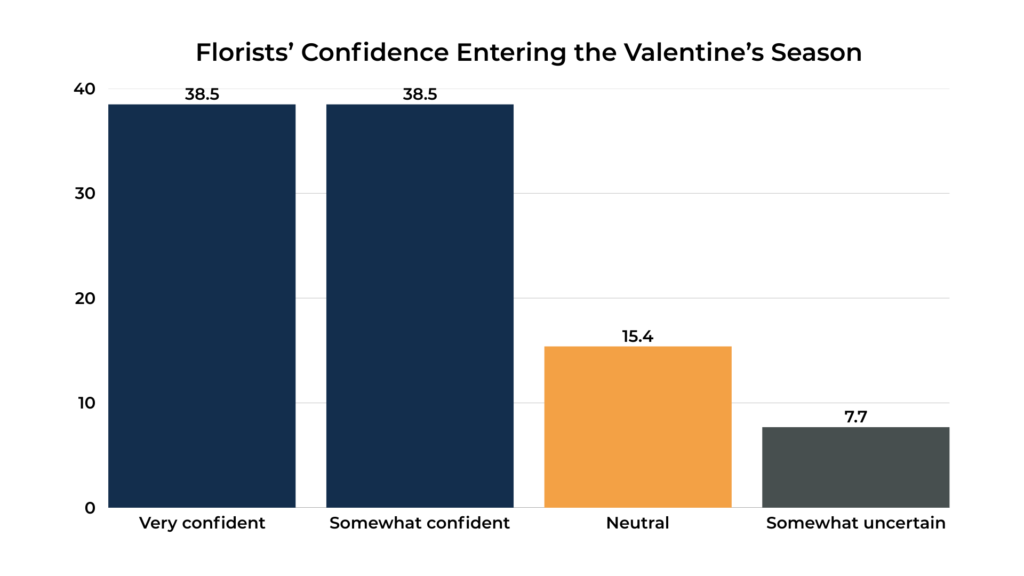
Florist Confidence Entering the Valentine’s Season
Florists entered the Valentine’s season with a generally positive level of confidence regarding product availability and supplier coordination. Many retailers indicated that communication with suppliers and early planning helped them feel prepared for one of the year’s busiest floral moments.
These responses also reflect broader florist industry insights around how retailers approach major floral holidays and manage supply expectations. As part of this Valentine’s Day 2026 floral industry report, these outcomes help connect pre-season expectations with real execution signals.
Seventy-seven percent of respondents reported feeling either very confident (38.5%) or somewhat confident (38.5%) about having the products they needed for the holiday. This is important because it shows that pre-season expectations around product availability and supplier coordination were largely aligned with how the Valentine’s season ultimately played out.
To better visualize how florists felt entering the season, the chart below shows the distribution of confidence levels among respondents.
When it came to choosing suppliers, quality remained the top priority. Florists identified quality and vase life (30.8%) as the most important factor, followed by long-term relationships and trust (23.1%).
These priorities highlight the criteria florists rely on when selecting supply partners during peak seasons.
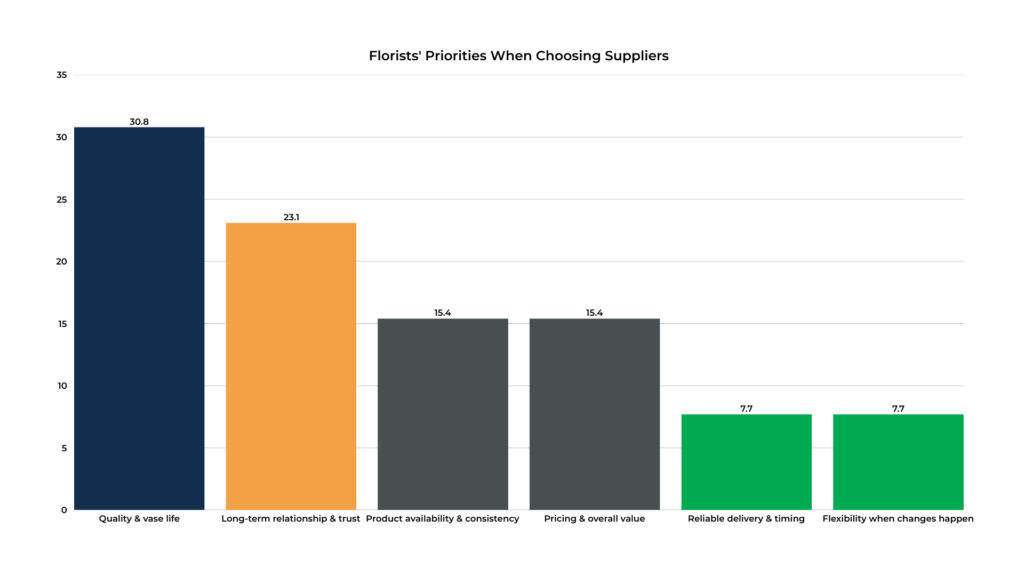
These responses reinforce something the floral industry has long understood: reliable supplier relationships and consistent product performance remain essential to successful holiday execution and reflect ongoing floral retail trends across the industry.
Top Concerns Florists Faced Before Valentine’s
As the Valentine’s holiday approached, florists identified several operational concerns that could affect execution. These concerns centered primarily on labor availability, uncertainty in customer demand, and maintaining consistent product quality during a high-volume sales period.
The chart below illustrates the primary concerns florists shared ahead of the holiday.
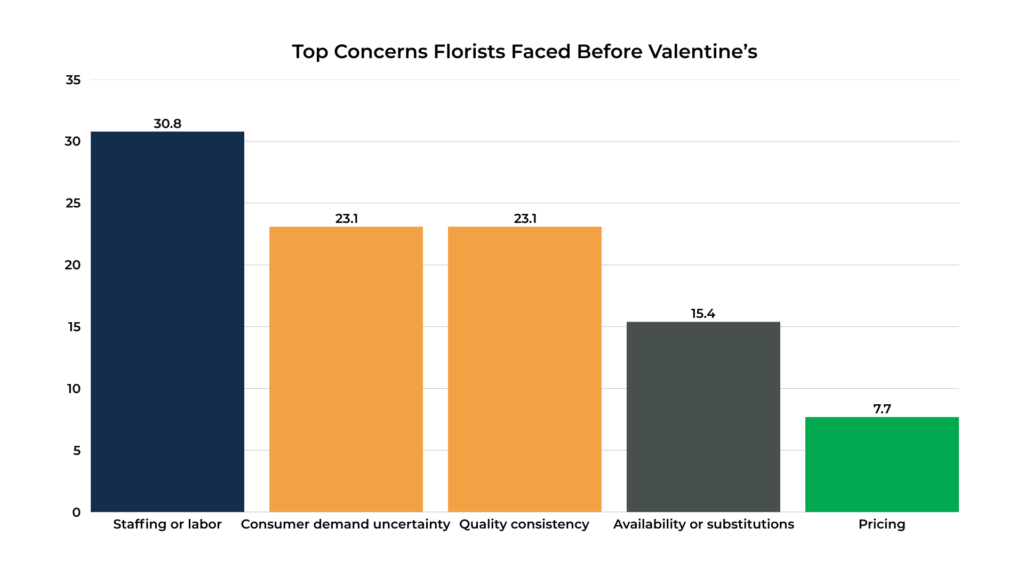
Labor challenges are not new to the floral industry, particularly during peak seasons when order volumes increase dramatically within a short timeframe. Flower shops must balance design production, deliveries, customer service, and inventory handling simultaneously.
Florists also identified specific roles that were more difficult to fill than others during the preparation period.
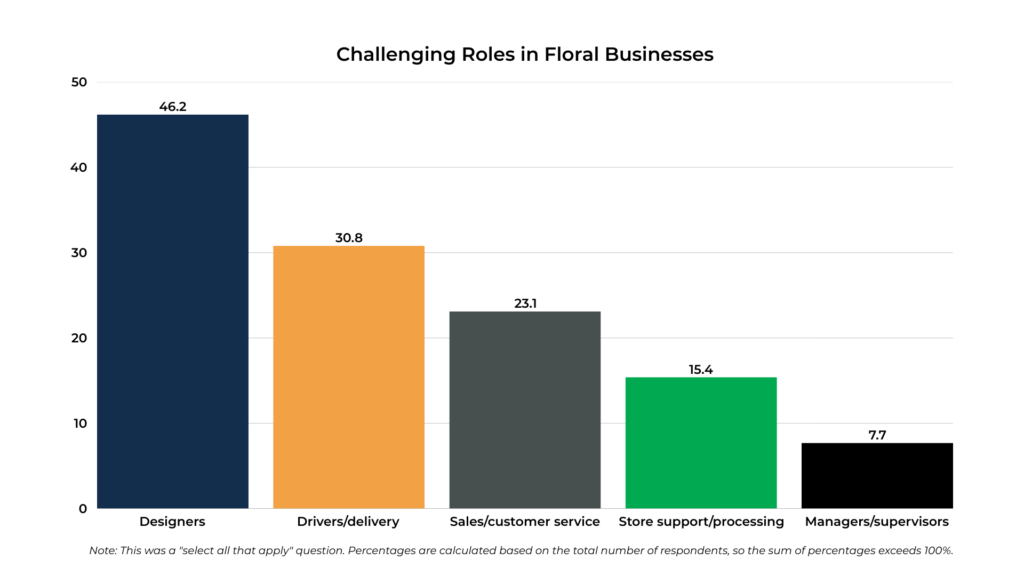
Interestingly, pricing was the least-cited concern before the season, suggesting that most florists were focused on operational readiness rather than margin pressure heading into the holiday.
How the Valentine’s Season Played Out for Florists
Once the holiday passed, florists reflected on how the Valentine’s season actually unfolded in their businesses. Overall, the responses indicate that most flower shops experienced a relatively stable and manageable holiday period.
Nearly 70% reported that their Valentine’s performance met or exceeded expectations, suggesting that planning and supplier coordination generally aligned well with customer demand.
These responses provide valuable florist survey insights into how the season performed across retail flower shops.
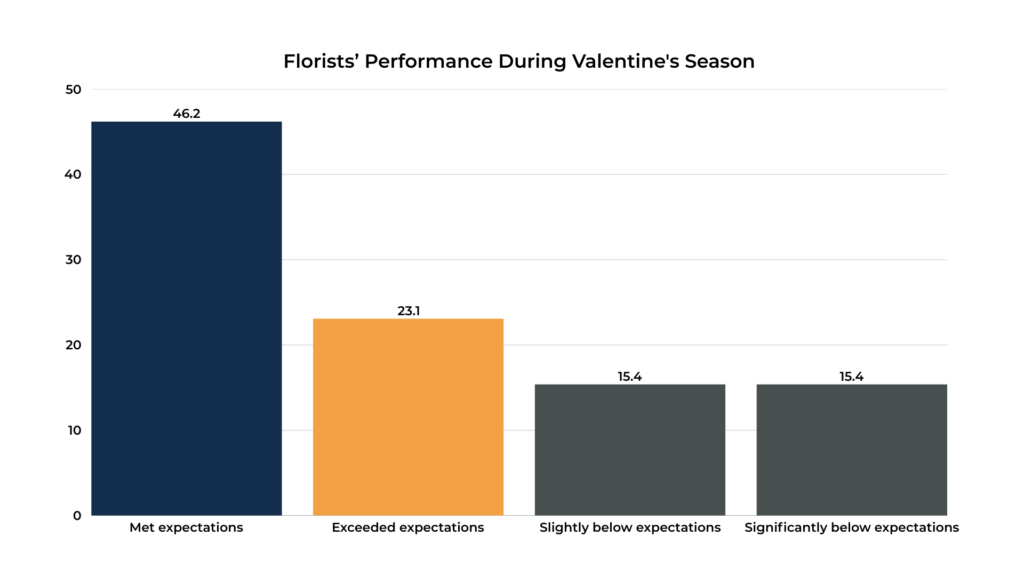
While many respondents indicated that operations ran smoothly, several challenges still emerged during execution.
The following chart highlights the issues florists most frequently encountered during the holiday period.
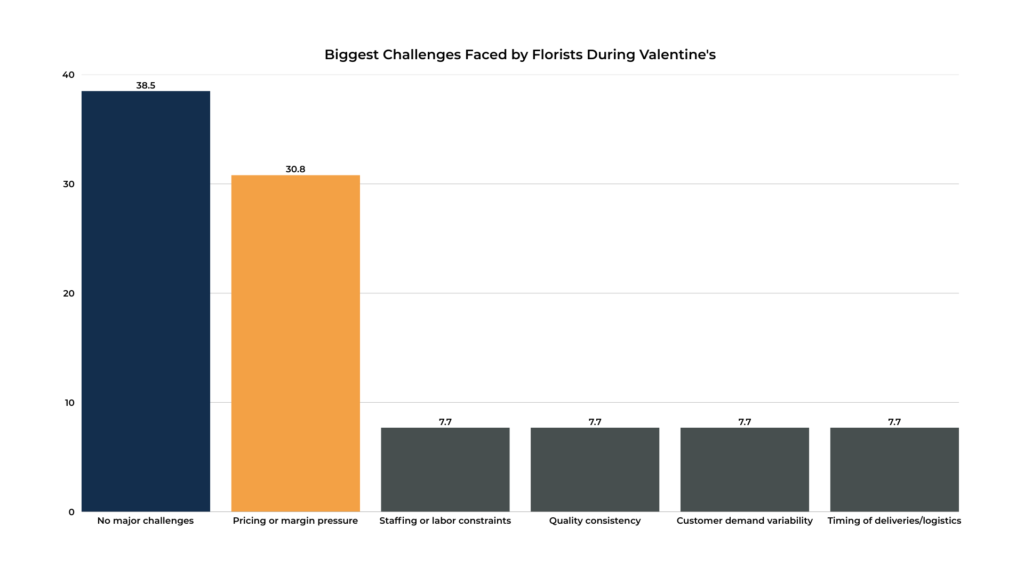
This reflects an evolving dynamic within the floral industry. While logistics and operational execution may be improving, maintaining healthy margins remains a focus for many floral businesses as they navigate rising costs across the supply chain.
Roses Continue to Lead Valentine’s Flower Sales
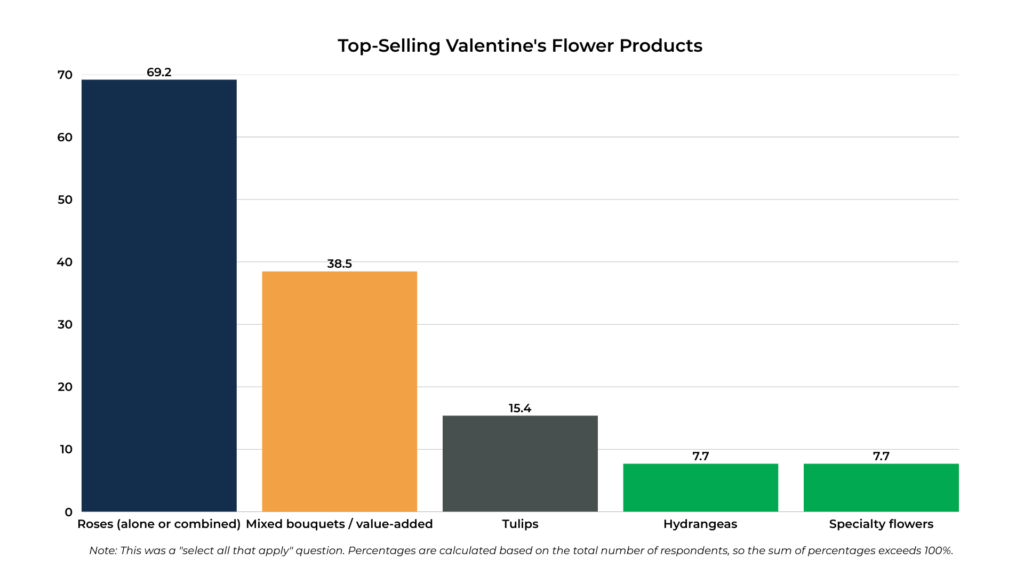
When it came to product performance, roses continued to dominate Valentine’s flower sales across most participating flower shops.
Florists widely reported roses as their strongest-selling product, either sold alone or incorporated into mixed arrangements.
Nearly 70% of florists reported roses as their top-performing Valentine’s product.
These results reinforce long-standing Valentine’s floral trends that continue to shape product demand each year.
Customer color preferences followed a similar pattern. While classic red remained the dominant color theme, many florists also reported strong demand for arrangements combining red with alternative tones.
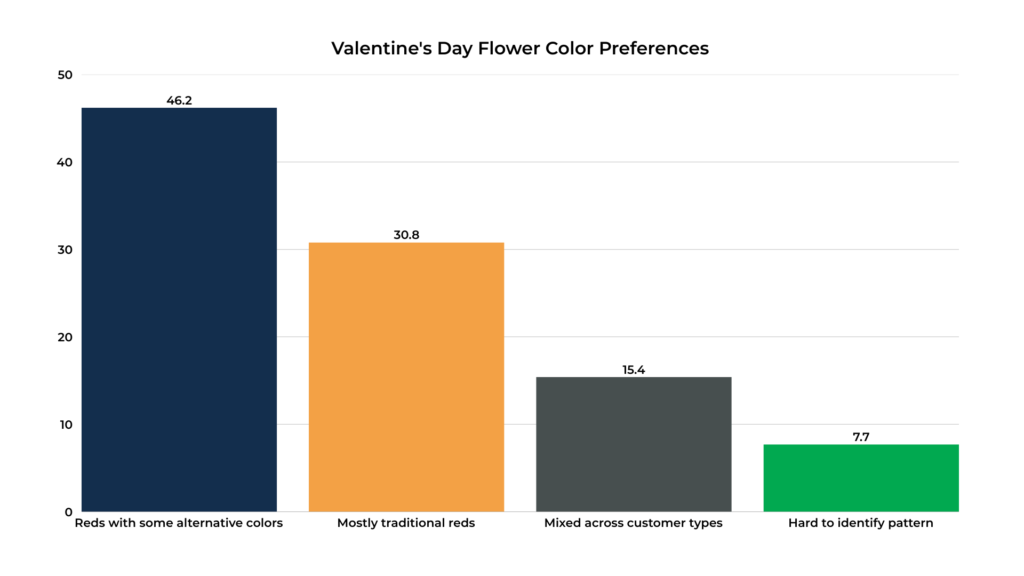
For growers and breeders, these trends reinforce both the enduring importance of red roses and the growing role of complementary varieties that support mixed arrangements.
The Reality of Valentine’s Flower Ordering Behavior
One of the most revealing insights from the surveys concerns how customers actually place Valentine’s Day flower orders.
While many florists anticipated receiving orders earlier in the season, the reality was quite different.
The chart below illustrates when the majority of customer orders actually arrived during the Valentine’s period.
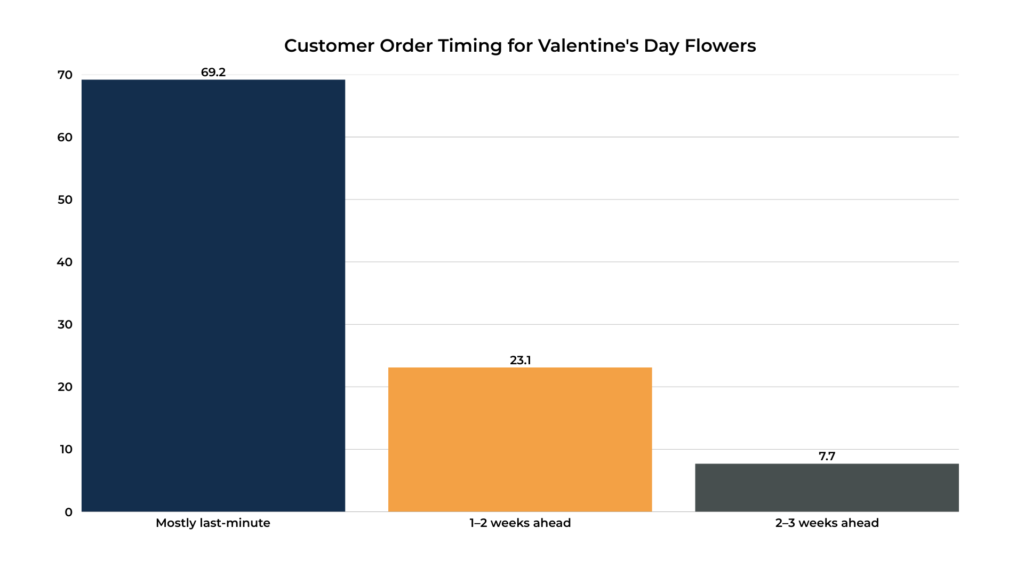
Nearly 70% reported that most customer orders arrived at the last minute, reinforcing a long-standing pattern in floral retail trends and customer purchasing behavior.
For wholesalers, growers, and logistics partners, this pattern continues to shape product availability, transportation planning, and supply timing across the entire value chain. These insights provide important signals around evolving florist demand trends within the market.
How Staffing Impacted Valentine’s Execution
Staffing is often one of the biggest concerns for florists during major floral holidays. Leading up to Valentine’s Day, many retailers expressed uncertainty about whether they would have enough labor to handle the surge in orders.
However, when the holiday concluded, most florists reported that staffing ultimately proved manageable.
More than half indicated that staffing was sufficient, while others described the situation as tight but still workable.
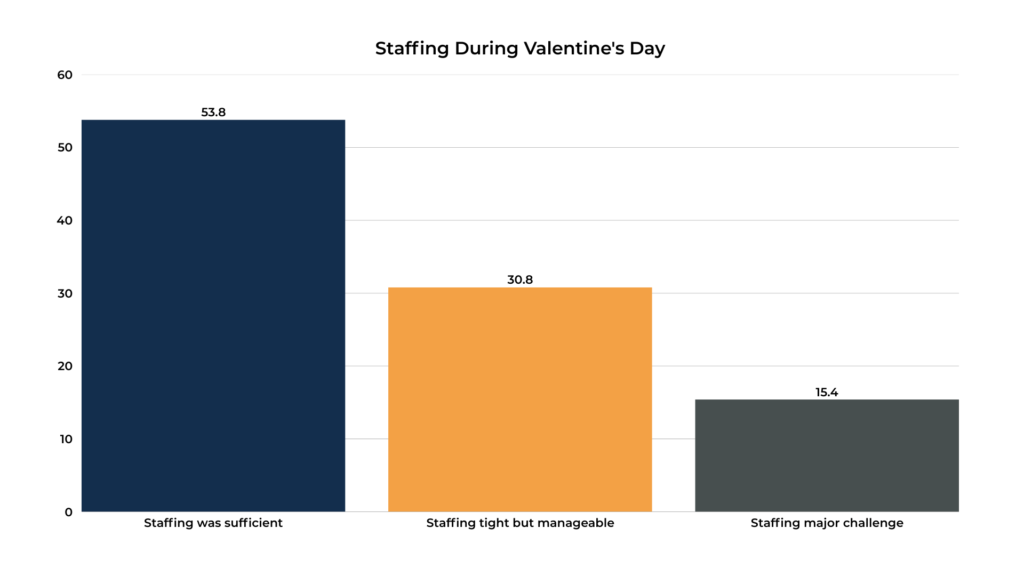
Designers remained the most difficult role to staff, followed by sales teams and delivery drivers—underscoring the critical role skilled floral designers play during peak floral moments.
Operational Stability During the Valentine’s Season
From inventory planning to delivery execution, many florists reported a season marked by operational stability.
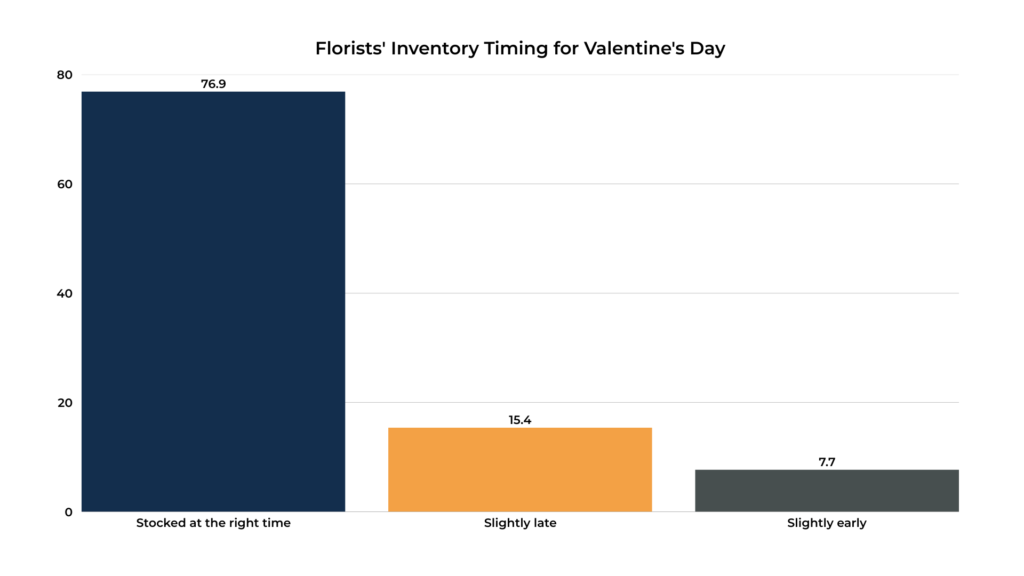
Preparation and supplier coordination appeared to play a key role in this outcome, with most respondents indicating that their inventory timing aligned well with customer demand.
Nearly 77% reported stocking inventory at the right time, suggesting that pre-booking strategies helped support smoother holiday operations.
Weather disruptions also proved limited for most respondents during the season.
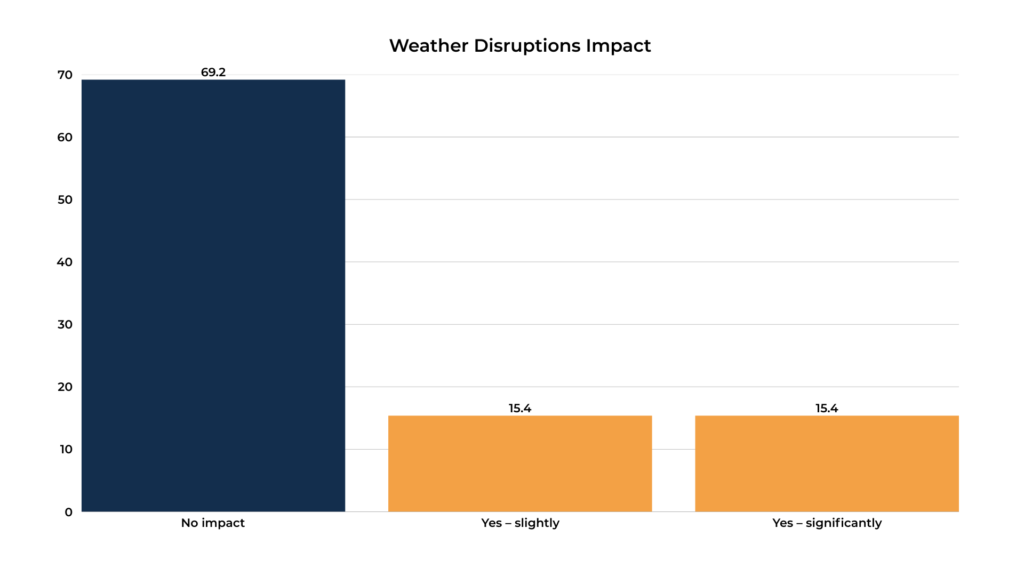
Taken together, these responses reflect broader floral industry insights about how preparation, supplier coordination, and operational discipline help retailers navigate peak floral moments.
These florist industry insights provide an important perspective not only for retail flower shops but also for growers, breeders, wholesalers, and logistics partners who support seasonal demand across the market. Understanding how retailers experience major floral holidays helps the entire floral supply chain plan more effectively for future seasons.
What These Insights Mean for the Floral Supply Chain
While these insights reflect florist experiences during the Valentine’s season, they also provide useful signals for the broader floral supply chain. This Valentine’s Day 2026 floral industry report highlights how these patterns extend beyond retail and influence decision-making across the entire supply chain.
These floral supply chain insights offer growers, breeders, wholesalers, and logistics partners a clearer understanding of how retailers experience major floral holidays and shifting customer behavior.
As the floral industry moves into the next phases of the year, these signals provide an important perspective on customer demand, operational planning, and supplier alignment across the market.
By continuing to share florist industry insights and learning from seasonal performance, the supply chain can approach the seasons ahead with greater clarity, coordination, and confidence.
For more floral industry insights and conversations from across the floral industry, subscribe to the New Bloom Media newsletter.